
Mission
We bring AUTS2 families, clinicians, researchers, and drug developers together to turn scientific discoveries into treatments. Because progress happens faster together.
Vision
A future where effective, accessible therapies transform outcomes for people living with AUTS2 syndrome.
Our Story
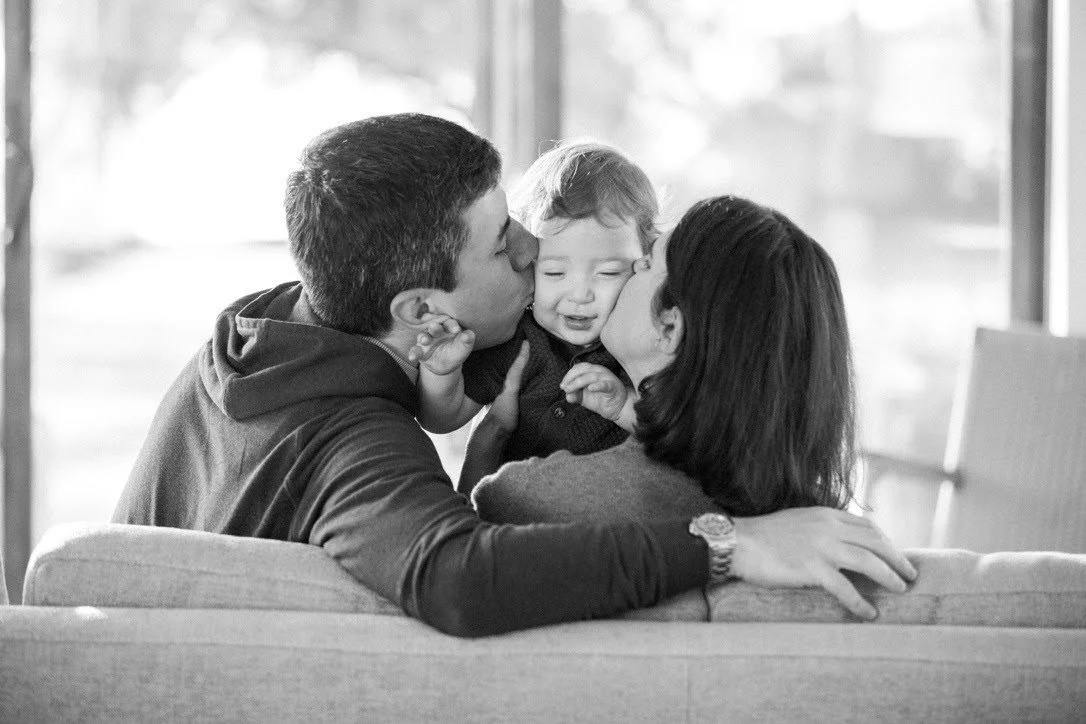
Our journey began with our son and a diagnosis that changed everything.
Our son shouts “go” the moment he spots even the smallest playground from his perch in the stroller. He loves running around the park, can make eight different animal sounds, and is fascinated by the feeling of kicking his feet in the water. Like many two-year-olds, he approaches the world with curiosity and delight, bringing joy to everyone and everything he encounters. And yet behind each of these milestones — a step, a kick, a sound — are hundreds of hours of therapy. Our son has worked extraordinarily hard to achieve them, far harder than most children ever have to.
He was born apparently healthy after an unremarkable pregnancy, labor, and delivery. While he had some early feeding difficulties, it did not seem unusual as his growth remained steady. Little did we realize at the time that this was the first of many small signs that would eventually culminate in our son’s AUTS2 syndrome diagnosis on his first birthday.
For many families, the moment everything changes happens suddenly — a seizure, a concerning pediatrician visit, or a missed milestone like head control or rolling over. Our story unfolded more slowly. Our son met his early milestones, just at a slower pace, which we explained away because he had been born a few weeks early. Slowly, though, that creeping worry that he was behind turned into a quiet certainty that something wasn’t right.
When the call from the geneticist came, we learned that our once seemingly healthy baby was struggling because he had been born with a genetic difference that, for now, no medicine can treat. And yet, for all the heartbreak that moment delivered, that day also brought something essential: clarity. In some ways, those months of not knowing had been the hardest of all. With knowledge came the realization that we were no longer helpless. Even the rarest diagnosis gives you a path forward.
Armed with this new information, we felt empowered to provide our son with every therapy that might help him. Previously turned away by Early Intervention and reassured by our pediatrician that everything was fine, we were finally better equipped to advocate for him. We built a robust therapy schedule, and our son continues to make steady progress.
Just as importantly, we found community. We connected with families around the world whose children share a similar diagnosis and were struck by the similarities in their strengths, challenges, and personalities. For the first time, we realized we were not alone, and that realization filled us with hope.
We also began reaching out to researchers who had published on AUTS2, and again and again we were met with kindness and generosity. Through these conversations we learned something extraordinary. A treatment for our son in his lifetime, within a timeframe that matters for his development, is not science fiction. It is a real possibility.
We are entering a new era of precision medicine where the technology exists to move beyond simply describing genetic conditions and toward designing therapies that directly target their underlying causes. Across rare genetic disorders, gene therapy, RNA-based therapeutics, and other precision approaches are moving rapidly from the lab toward the clinic.
For families like ours, this moment in science carries both hope and responsibility. Progress does not happen on its own. In a world where rare conditions are often overlooked by traditional research pipelines, we must bridge the gap ourselves with robust data, radical collaboration, and a fierce sense of urgency.
The AUTS2 Research Collaborative was born out of a promise to our son, and to others like him, to do everything we can to build the best possible future, and to ensure our community is not left behind in this new era of medicine. The science is here. The opportunity is real. With the right data, shared tools, and coordinated effort, targeted treatments for AUTS2 syndrome are within reach — in our children’s lifetimes, and within a timeframe that matters.
That is the future we are working toward.
Eliza Goldwasser, Founder
Ethan Goldwasser, Co-Founder